
City activation is about more than filling a space with people. It is about giving people a reason to move, discover, and engage with a place in a way that feels meaningful rather than passive.
How Scavenger Hunt Apps Can Support City Activation Events
Scavenger hunt apps for city activations to life is one of the most effective ways to transform streets, landmarks, and local businesses into interactive experiences that participants actually enjoy.
Key benefits for city activation events:
1. Increase Foot Traffic: Guide participants to multiple locations, boosting visits and dwell time.
2. Enhance Engagement: Interactive challenges and mini-tasks make every stop memorable.
3. Encourage Social Sharing: Photo and video challenges generate organic user content.
4. Simplify Event Management: Participants join instantly and progress at their own pace.
5. Provide Insights: Real-time analytics track engagement, completion, and popular spots.
6. Promote Learning: Trivia and educational challenges make the experience fun and informative.
Here are five ways scavenger hunt apps can support your next city activation event.
1. Turn the City into an Interactive Exploration Game
Instead of relying on traditional tours or guided walks, a scavenger hunt app lets you turn the entire city into a playable experience. Participants follow clues that lead them from one landmark to another, and each stop can unlock a story, a piece of trivia, or a small challenge before they move on
What makes this approach powerful is how it changes behavior. People slow down, pay attention to details they would normally walk past, and become genuinely curious about their surroundings. The experience is self-directed, but the app provides enough structure to keep participants on track and engaged throughout.
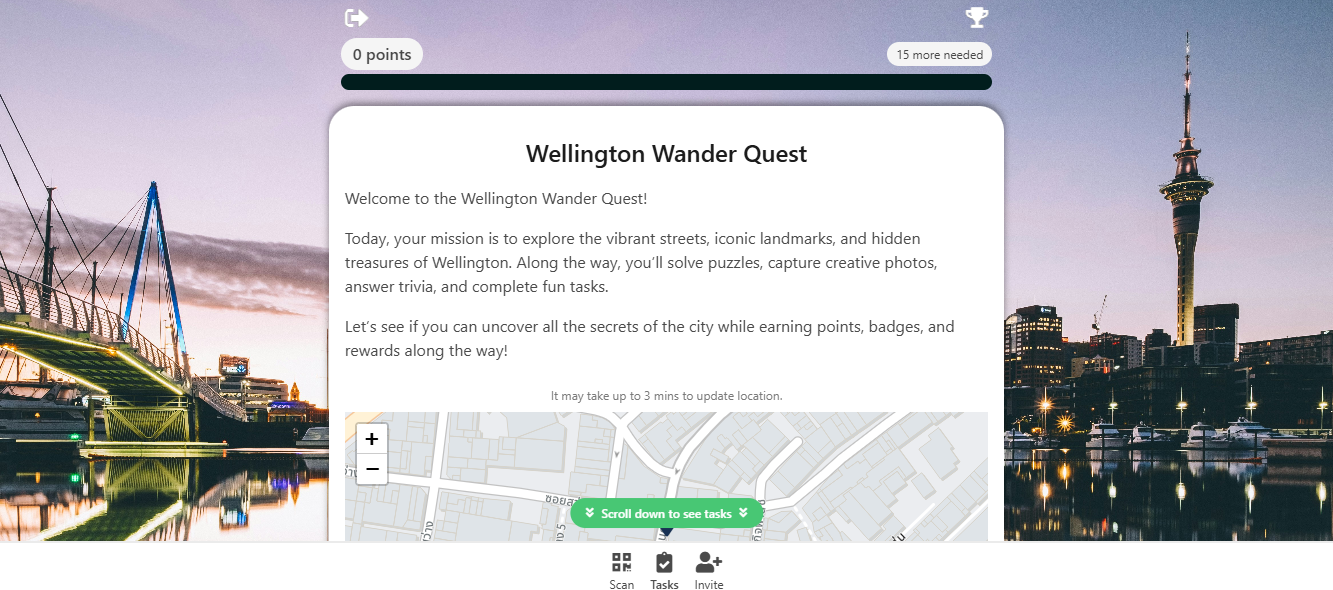
To create this type of experience, you need a platform that supports:
- clue-based navigation
- location check-ins using GPS
- QR code checkpoints for unlocking tasks
- multiple task types to keep the experience dynamic
When choosing a scavenger hunt app, it’s important to ensure it can support city-wide gameplay and exploration-based flows, not just simple QR scanning.
Web-based scavenger hunt app like PlayTours are designed for this use case. The app allows you to build interactive city tours using built-in GPS-based tasks, QR code scanning and generation, and a flexible story and logic builder to control how participants move through the experience.
This makes it possible to design scalable, engaging city exploration games without adding complexity for participants.
Best for: Tourism boards, cultural festivals, city branding initiatives
2. Drive Foot Traffic to Local Businesses
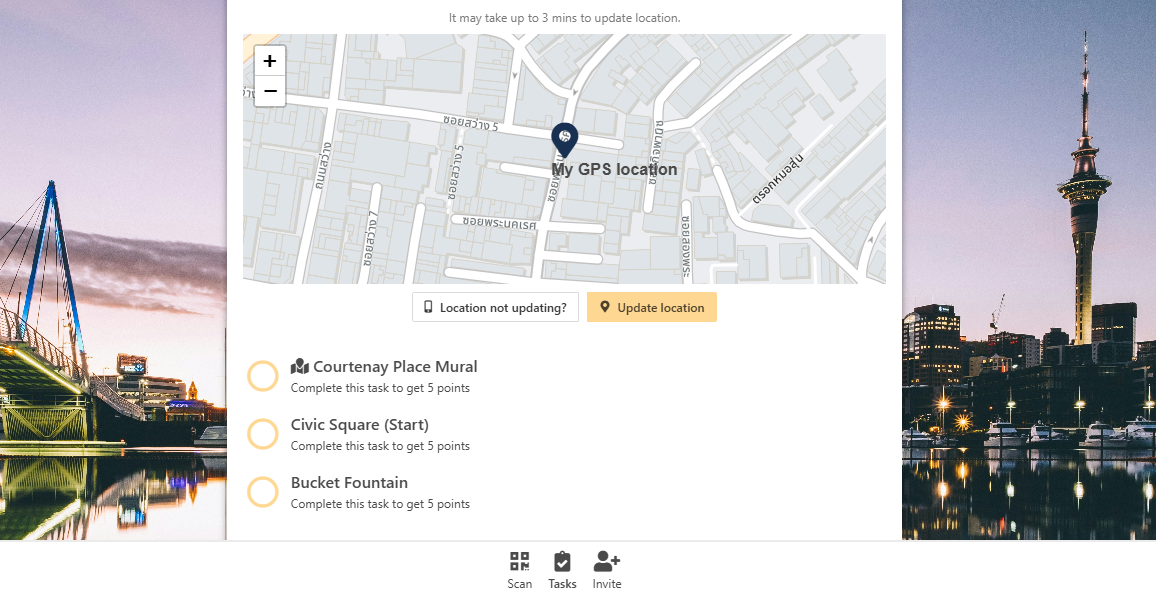
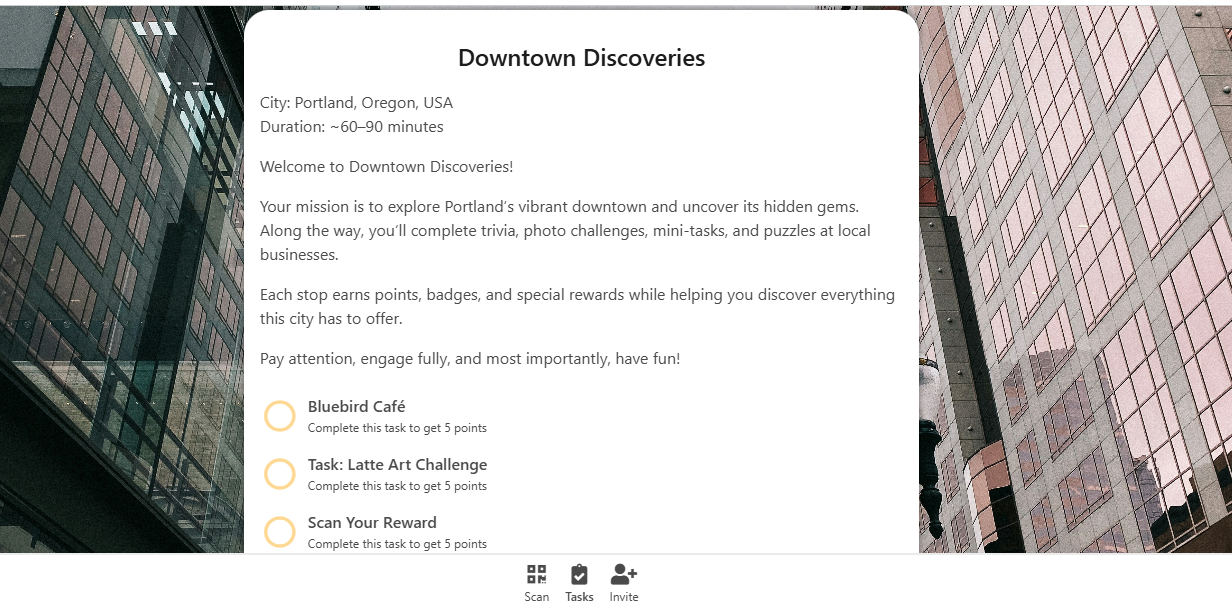
Scavenger hunts are also a natural way to bring people into local businesses without forcing it. Instead of simply listing partner locations, you integrate them into the game. Participants might visit a café to complete a challenge, scan a QR code inside a shop, or unlock a reward after arriving.
This creates a win-win dynamic. Participants get a more interactive experience, while businesses benefit from increased foot traffic and longer visits.
Key Features That Make It Work
To make this approach truly effective, the experience needs to be thoughtfully designed. It’s not just about adding tasks; it’s about using the right features in a way that naturally encourages people to walk in, explore, and stay longer.
1. Location-Based Check-ins (GPS or QR Codes)
Location-based check-ins, whether through GPS or QR codes, are essential. They ensure that participants physically visit each location and prevent users from completing the game remotely. More importantly, they help guide players across multiple businesses, spreading traffic throughout the area instead of concentrating it in just one spot.
2. In-Store Challenges & Tasks
Once participants are inside, the experience should go beyond a simple check-in. Well-designed in-store challenges can encourage people to explore products, interact with the space, or even engage with staff. This increases the time they spend in the store and visits feel purposeful rather than transactional.
3. Rewards, Discounts & Coupons
Rewards then play a key role in turning engagement into real business results. Offering discounts, coupons, or small incentives gives participants a reason to make a purchase, not just complete a task. It also increases the chances of repeat visits, especially if the reward feels valuable and immediate.
Works best for: It’s particularly effective for retail districts, malls, and downtown activations where engagement and movement matter.
3. Gamify Festivals and Public Events
Large events can sometimes feel overwhelming or uneven, with crowds gathering in just a few popular spots. By layering a scavenger hunt across the event, you give people a reason to explore everything.
Participants move between booths, zones, or stages while completing small missions along the way. Points, progress, or rewards keep them engaged, and the experience feels more structured without being restrictive.
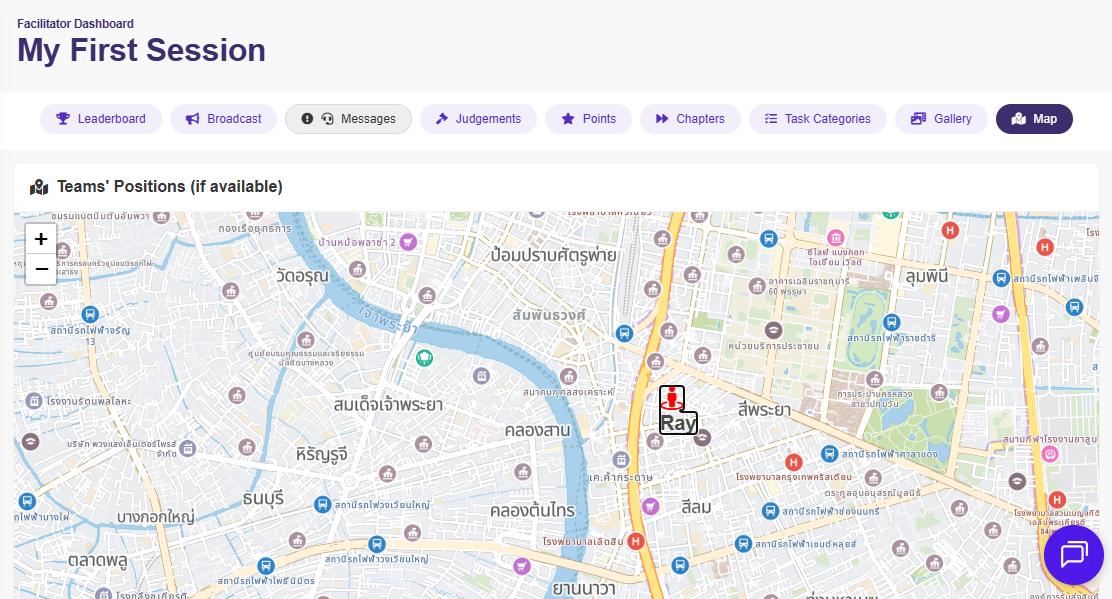
A scavenger hunt app like PlayTours is especially effective for large-scale events, which also results in cost savings in pricing. It guides attendees through interactive maps, unlocks location-based challenges, and tracks progress in real time. Gamification elements such as points, badges, and milestones keep participants engaged, while still allowing them to explore the event at their own pace. The result is more evenly distributed engagement across the venue, increased visibility for booths, greater interaction with sponsors, and an overall more memorable experience for visitors.
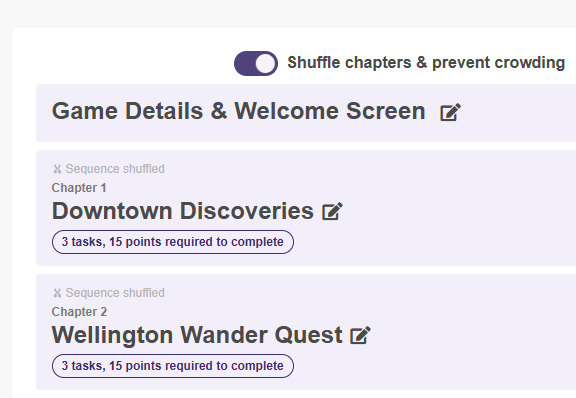
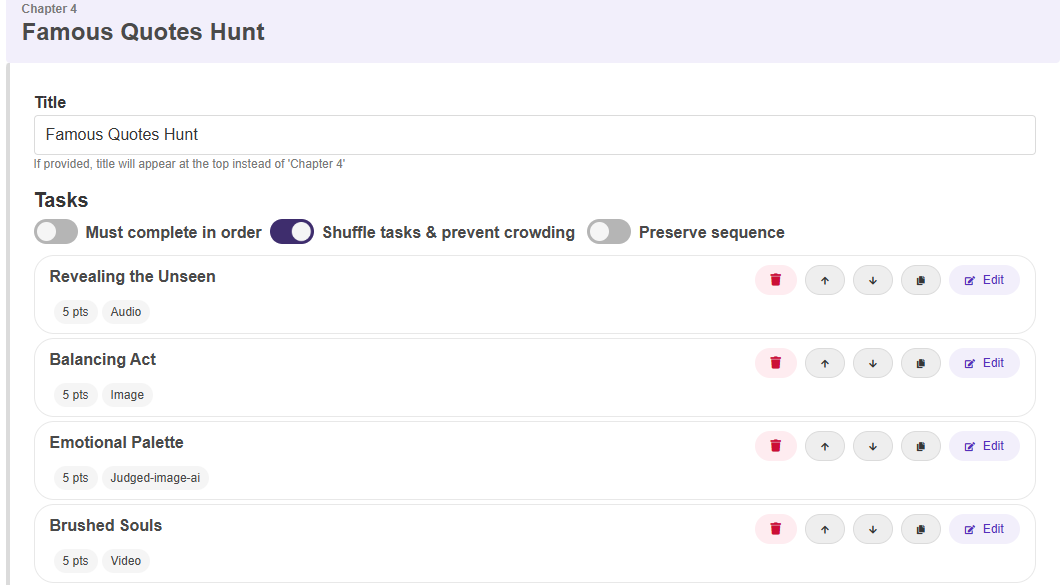
PlayTours also supports advanced, scalable logic. Organizers can design games that shuffle chapters or tasks, preventing crowding in one area while keeping gameplay interactive. The admin dashboard and analytics provide a central control hub to monitor participants, track completion, and optimize the event in real time.
Why Playtours scavenger hunt app works for large events:
- Encourages full exploration of the event space
- Keeps attendees engaged longer with interactive missions
- Prevents overcrowding in popular zones
- Provides measurable insights for organizers and sponsors
Works best for: Food festivals, music events, cultural celebrations, and city-wide public activations.
4. Turn Participants into Content Creators
One of the most valuable outcomes of any city activation is visibility, and scavenger hunts are a natural way to achieve it. By incorporating photo or video challenges, you encourage participants to capture and share moments throughout the experience. Whether it’s a creative shot, a team photo, or something tied to a specific location, these interactions often lead to organic social media sharing, expanding the reach of your event.
Instead of asking people to post, give them a reason to. With PlayTours, turning participants into content creators becomes effortless.
With PlayTours, turning participants into content creators becomes effortless:
- Supports multiple multimedia task types, including AI-judged challenges, reducing manual work for organizers
- Creates a fun, interactive experience for participants
- Offers the live gallery exhibit feature to review all submissions, including images and videos
- Encourages participants to share experiences naturally, turning every visitor into a content creator
- Amplifies the reach and impact of city activations
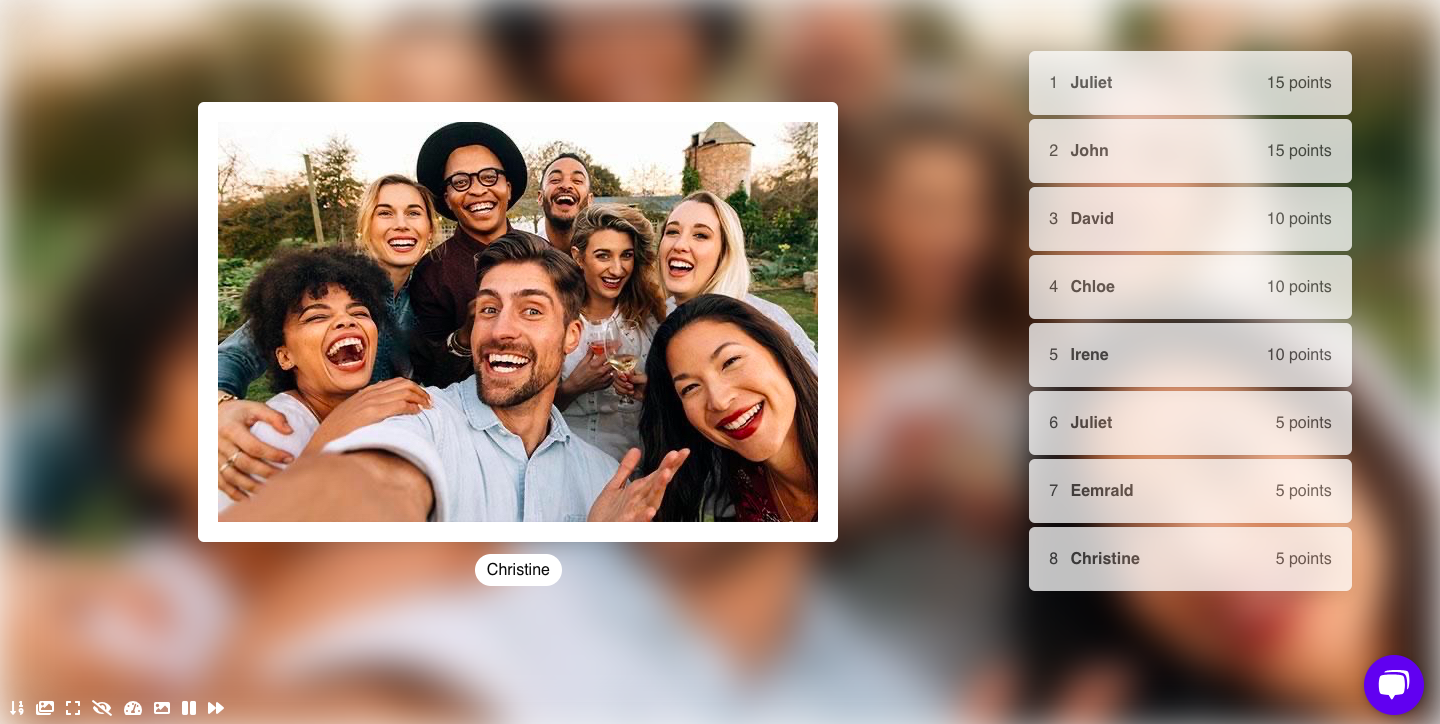
This combination can cancourages authentic, user-generated content and a seamless and engaging participant experience
Works best for: This helps expand your event’s reach while creating authentic, user-generated content that continues to promote the experience even after it ends.
5. Create Experiences That Educate While Entertaining
Scavenger hunts are not just about movement, they’re also a great way to deliver meaningful content. By adding trivia, short stories, or small puzzles at each stop, you can turn the experience into something both fun and informative.
Participants learn as they go, but in a way that feels natural and engaging rather than structured or formal.
With PlayTours, educational challenges can include:
- Historical or cultural trivia to teach participants about locations or landmarks
- Multiple-choice questions to test knowledge and make learning interactive
- Mini puzzles or story-driven challenges to keep engagement high
- Combining with GPS location checking and QR code scavenger hunts to ensure participants visit each location and complete challenges.
Works best for: Museums, heritage sites, educational tours, and city activations where the goal is to combine learning with interaction.
Conclusion
What connects all five of these approaches is a simple shift in how participants relate to the city around them. A scavenger hunt app does not add entertainment on top of a place — it reveals what is already there, and gives people the structure and motivation to go find it. Whether the goal is footfall, content, education, or brand awareness, the underlying mechanism is the same: people move, engage, and remember.
For event planners, tourism boards, and anyone responsible for activating public spaces, that is a powerful tool to have.
Frequently Asked Questions: Scavenger Hunt Apps for City Activation Events
1. What is a scavenger hunt app, and how does it work for city activation?
It's a web or mobile platform that turns a city into a game. Participants follow GPS clues or scan QR codes to unlock challenges at real locations. The app tracks progress, awards points, and delivers rewards, keeping people moving and engaged across the event.
2. Are scavenger hunt apps suitable for educational events like heritage tours?
Yes. Trivia, short stories, and location-based puzzles make learning feel active rather than passive. The most effective setups tie educational content to a physical location — so participants receive the information only when they're actually standing there.
3. Do participants need to download anything?
It depends on the app. Web-based scavenger hunt app like PlayTours let participants join instantly via a QR code or link with no download required, which is a practical advantage for large public events where onboarding needs to be instant.
4. What is the best scavenger hunt app for city activation events?
The right app depends on your event's specific needs, but a few features are worth prioritizing: web-based access so participants can join without downloading anything, GPS and QR code support, flexible challenge types, and a real-time admin dashboard. PlayTours is one platform that covers all of these in a single tool, making it a practical option for city-wide activations.
5. How do organizers measure whether the event worked?
Most platforms provide data on participation numbers, task completion rates, time spent at each stop, and overall hunt completion. This is useful both for post-event reporting and for making the case to sponsors or partner businesses that the activation delivered real results.