

Choosing a self guided tour app for tourism is harder than it looks. The market is crowded with audio tour platforms, GPS walking apps, and interactive experience builders, and each promises to be the best fit for your destination, museum, or city tour company. Tourism operators, destination managers, museum curators, and DMO teams all face the same challenge: how do you evaluate platforms when every vendor claims to be the best? This guide breaks down the five criteria that matter most when evaluating a self guided tour app for tourism, so you can make a confident decision without wasting time or budget on a platform that does not fit your actual needs.
This article is part of our interactive tour builder guide — a complete overview of GPS walking tour tools, how to choose one, and how to build your first tour.
1. Does It Support GPS-Triggered Content or Just Static Maps?
True self-guided tours use location awareness to deliver content at the right place and time. A platform that only offers static map pins forces tourists to manually figure out where they are and what to do next, which breaks the flow of the experience and creates friction at every stop. When a visitor has to cross-reference a static map with their actual location, the tour feels like homework rather than exploration.
What to look for: GPS geofencing that automatically triggers content when a visitor reaches a point of interest, location-triggered challenges or quizzes that unlock only when someone is physically present, and proximity-based content delivery that works without constant manual checking. The best platforms let you set a radius (typically 20-200 meters depending on the environment) and define what happens when a visitor enters that zone.
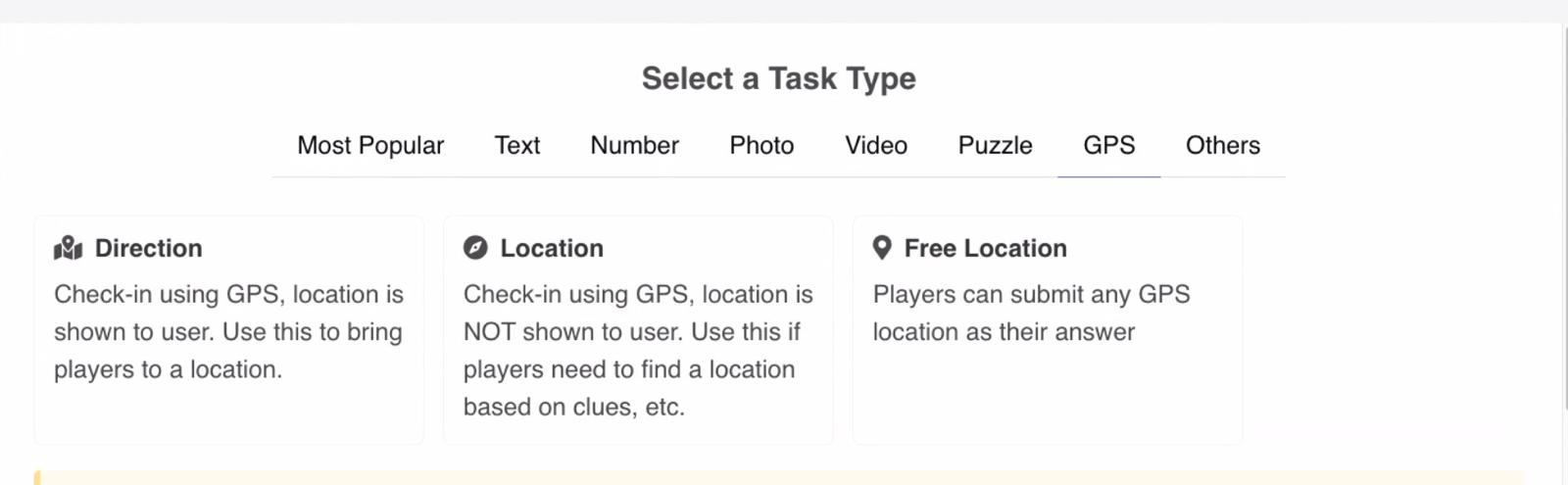
Red flag: The platform only offers static map pins with no location-based triggers. Tourists have to tap "I'm here" themselves, which feels clunky and reduces engagement. If the platform cannot detect where a visitor is and respond accordingly, it is not a true self-guided tour platform.
Platforms like izi.travel and VoiceMap use GPS to trigger audio narration when visitors arrive at a location, which is a solid baseline for audio-focused tours. But they stop at narration. There is no way to trigger a challenge, a photo mission, or a trivia question based on location. A self guided tour app for tourism that adds interactive elements on top of GPS triggers, such as challenges that unlock only when a group is within a geofenced area, creates a much more engaging experience that keeps visitors actively participating rather than passively listening.
PlayTours supports GPS-positioned tasks with configurable radius settings (20-200m), visible-outside-radius options so tourists can preview what is ahead and plan their route, and the ability to combine GPS check-ins with photo missions, trivia questions, QR code scans, or text-based challenges at the same location. This means a single tour stop can include a brief audio introduction, a trivia question about the landmark, and a photo mission to capture the best angle, all triggered automatically when the visitor arrives.
2. Can Tourists Use It Without Downloading an App?
Tourists will not install a dedicated app for a single day's activity. The friction of searching the App Store, waiting for a download, creating an account, granting location permissions, and figuring out how the app works kills conversion rates before the tour even begins. Industry data suggests that app-install gates cause 30-50% drop-off before a visitor even starts a tour. For tourism operators serving walk-up visitors at a visitor centre, hotel concierge desk, or museum entrance, every second of friction is a lost customer.
What to look for: A web-based platform that works entirely in the smartphone browser with no installation required. QR code access at starting points so tourists scan and go within seconds. Full compatibility with any modern smartphone browser, including Safari on iOS, Chrome on Android, and Samsung Internet. The experience should feel as seamless as opening a link.
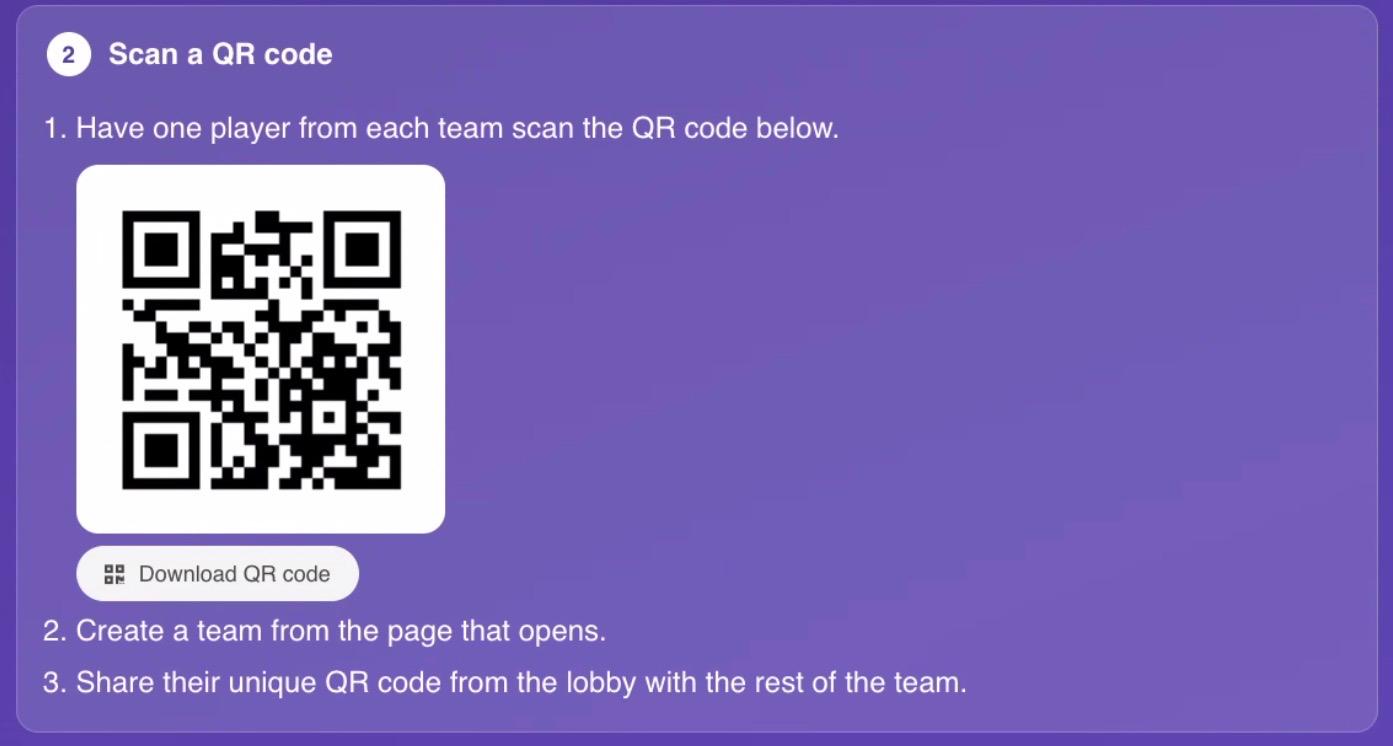
Red flag: The platform requires tourists to download a native app from Google Play or the App Store before they can access any tour content. If the first step in your visitor's experience is "go to the app store and search for our app," you have already lost a significant portion of your audience.
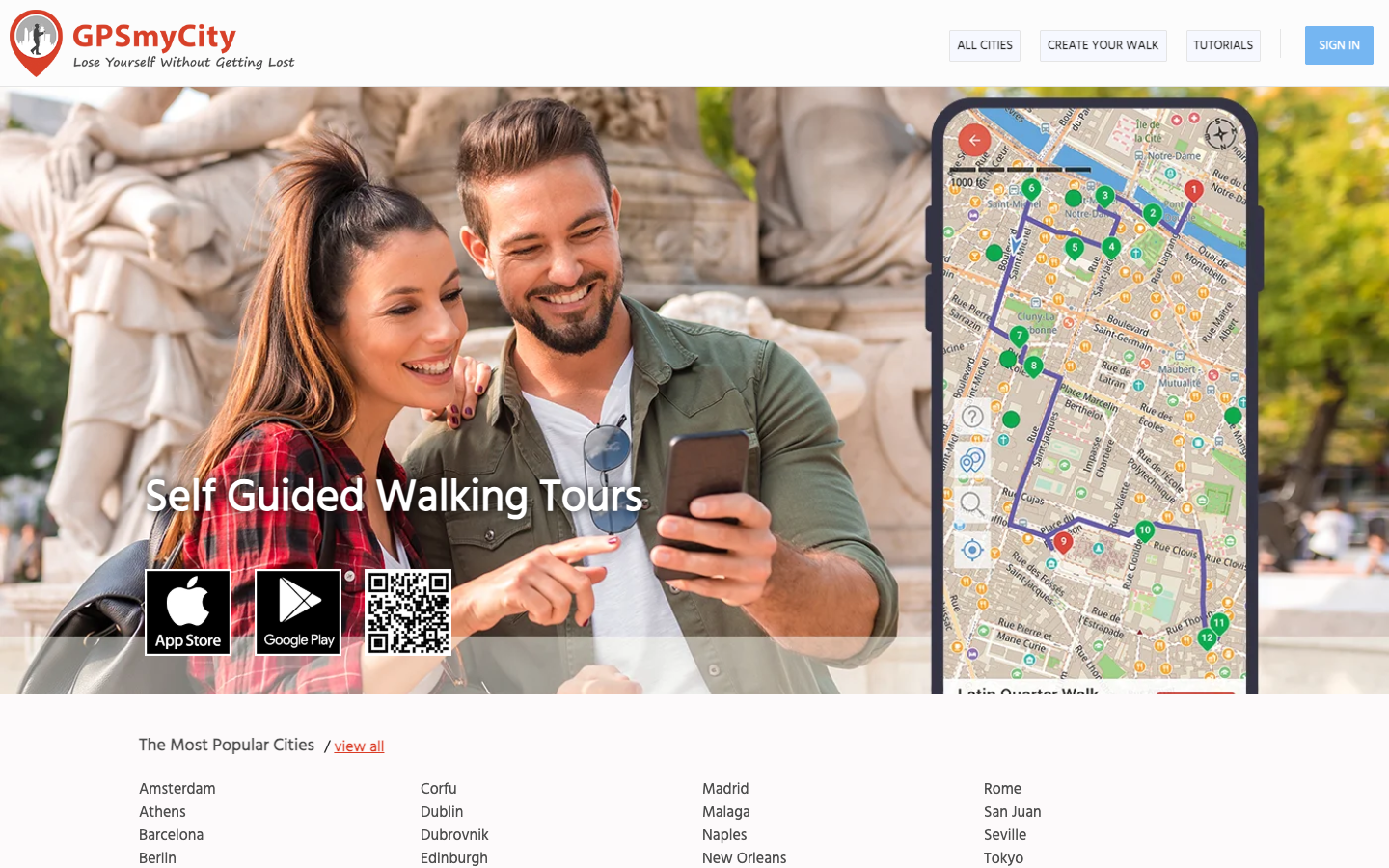
GPSmyCity and VoiceMap both require native app downloads. Visitors must search for the app, install it, and then search again for the specific tour within the app. izi.travel offers a web version that works in the browser, but its full feature set, including offline playback and GPS tracking, is gated behind the native app. For a tourism operator managing high foot traffic at a popular destination, the difference between a QR code that launches a tour instantly and an app-store download link is the difference between hundreds of engaged visitors and dozens of frustrated ones.
A self guided tour app for tourism that works entirely in the browser, with no download required, removes the single biggest barrier to adoption. Visitors scan a QR code on a sign at your starting point, the tour loads in their browser, and they are on their way in under 10 seconds. No app store, no account creation, no permissions dialogue beyond the one-time location prompt that every browser handles natively.
3. How Easy Is It to Create and Update Tours?
Tourism operators need to update tour content seasonally, add new points of interest when exhibits change, adjust routes based on construction or seasonal closures, and create special editions for holidays or events. If updating a tour requires developer assistance, a support ticket, or a dedicated content management team, the platform becomes a bottleneck rather than a tool that empowers your team.
What to look for: A drag-and-drop tour builder that lets you add locations on a map, upload multimedia content (photos, videos, audio clips, text), and rearrange stops without any coding. Bulk import of locations from a spreadsheet or Google Maps is a major time-saver when creating tours with many stops. The ability to preview the tour as a visitor would see it is essential for quality control.
Red flag: The platform requires developer assistance or a dedicated content management team to update tour content. If you need to submit a ticket, wait for a developer, or learn a proprietary scripting language to change a single stop description, the platform is not designed for tourism operators.
izi.travel offers a web-based creator with multimedia support, but its interface is designed primarily for audio content creation. You record or upload audio, pin it to a location, and that is essentially the workflow. GuideMe and StoryTour offer similar creator tools with varying degrees of flexibility, but most are optimised for a single content format. The key differentiator is whether the platform supports multiple content types at a single tour stop, not just audio narration or text.
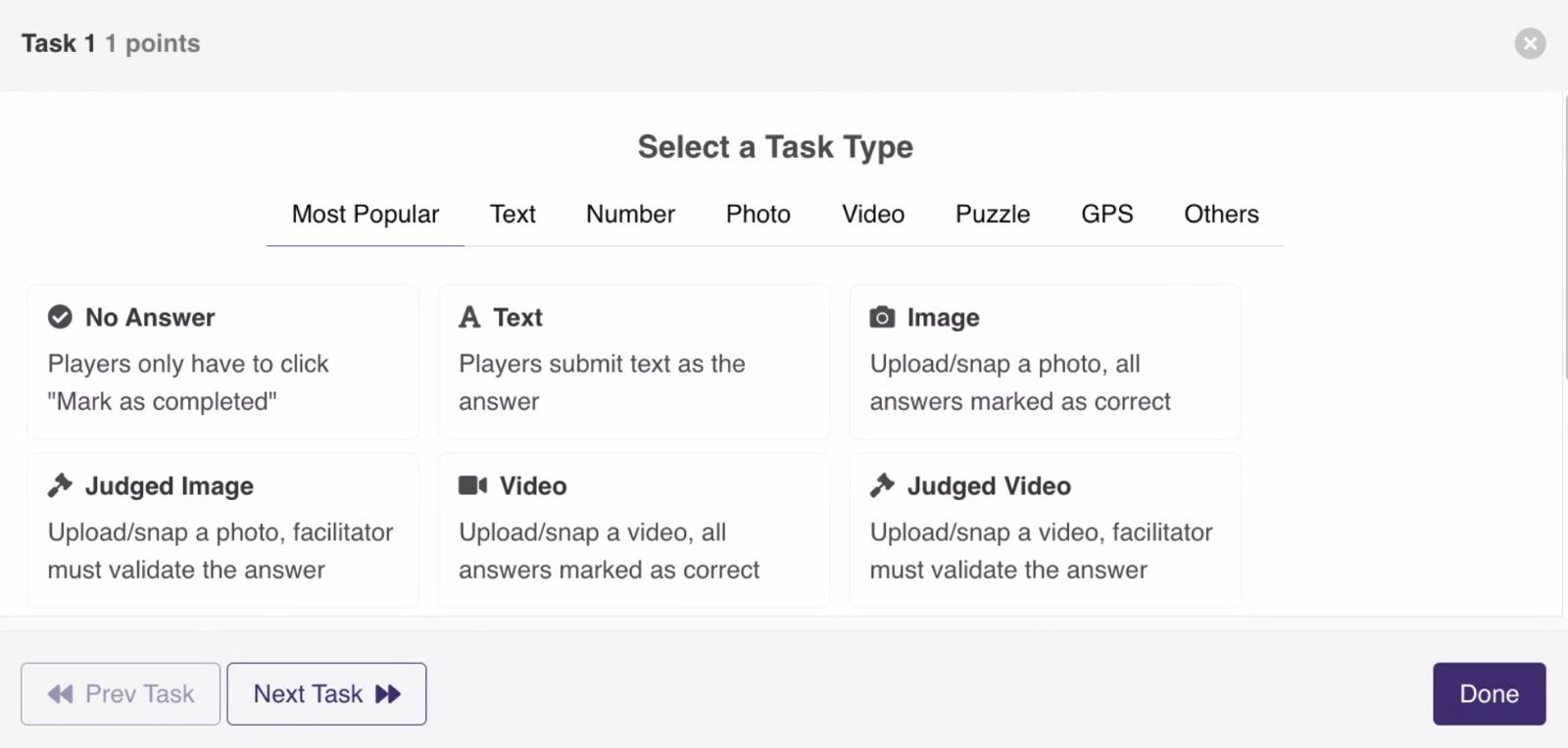
A self guided tour app for tourism that lets you mix text instructions, photo challenges, trivia questions, audio clips, and QR code scans at the same location gives you more creative freedom to design tours that suit different visitor demographics. A family tour might emphasise photo missions and trivia. A history-focused tour might lean on audio narration with text supplements. A school group tour might include quiz questions at every stop. The platform should not force you into one content format.
PlayTours offers a drag-and-drop game builder where tourism operators can add locations on a map, configure GPS geofences, upload multimedia, and mix task types freely at each stop. Tours can be updated in real time, and changes are reflected immediately for visitors. No developer needed, no support ticket required.
4. Does It Offer More Than Just Audio Narration?
Modern tourists expect interactive experiences. Audio-only tours, while informative, are fundamentally passive. Visitors listen, walk, and move on. There is no engagement loop, no reason to pay close attention to details, and no memorable moment that makes them share the experience on social media or recommend it to friends. In an era where visitors are accustomed to interactive digital experiences everywhere else in their lives, a passive audio guide feels dated.
What to look for: Interactive challenges such as trivia questions at each stop, photo and video submission missions that encourage visitors to engage with their surroundings, scavenger hunt mechanics that reward exploration beyond the main route, and optional leaderboards or scoring for groups, families, or school classes competing against each other.
Red flag: The platform only offers audio narration with no interactive elements. If the entire experience is "walk here, listen to a recording, walk there, listen to another recording," it is an audio guide, not an interactive self-guided tour. For tourism operators competing for visitor attention, that distinction matters.
This is where the self guided tour app for tourism market splits most clearly. izi.travel, VoiceMap, and GPSmyCity are fundamentally audio tour platforms. They excel at narration and have built extensive libraries of audio content across thousands of destinations. But they offer no gamification, no challenges, no photo missions, and no interactive feedback loop. Visitors consume content passively and move on.
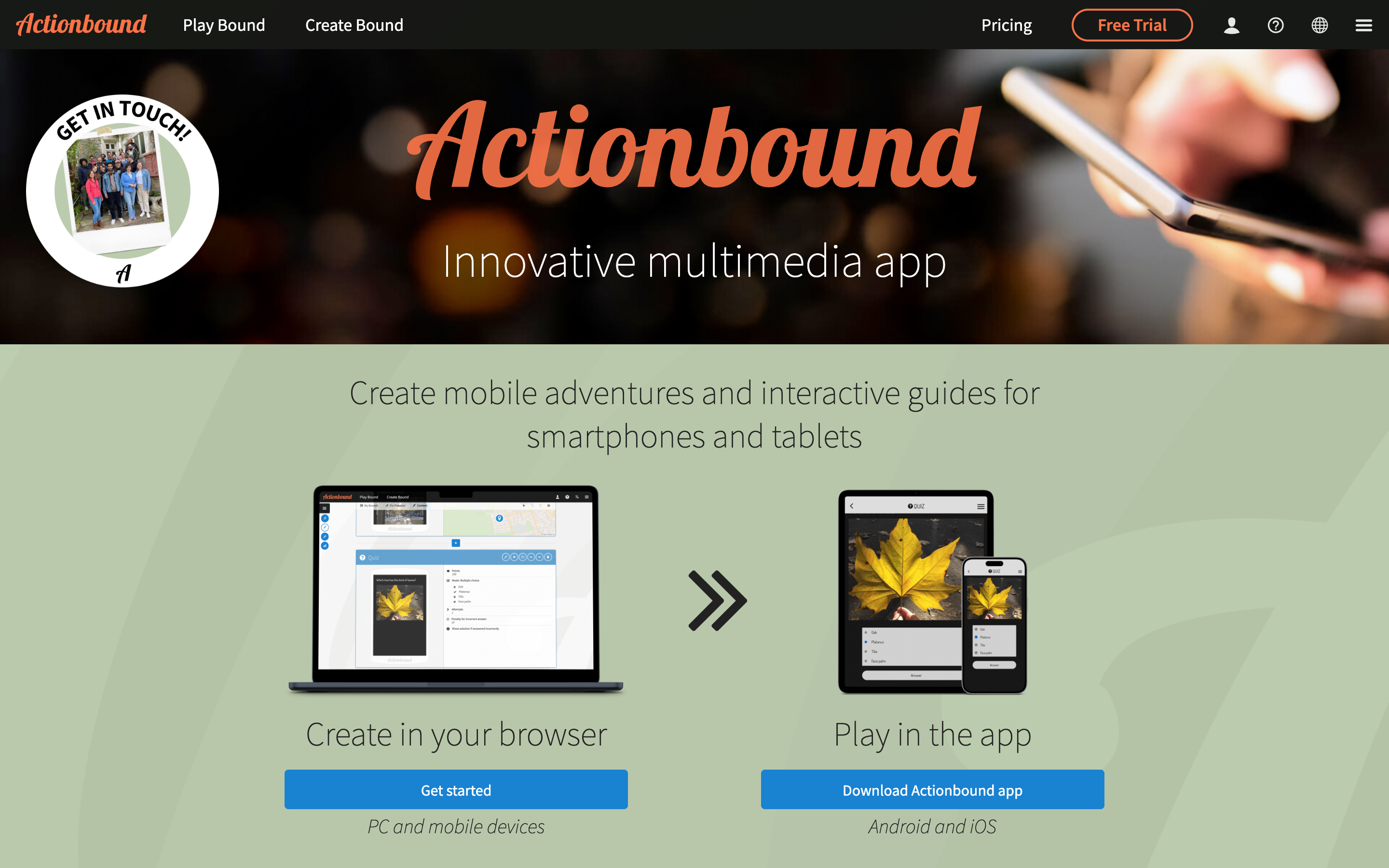
Platforms like PlayTours and Actionbound add interactive task types on top of location-based triggers. A tour stop can include a trivia question about the landmark's history, a photo mission to capture a specific architectural detail, a QR code scan at a hidden plaque, or a text-based puzzle that requires visitors to read the information board carefully. For family tourists, school groups, or corporate teams visiting a destination, these interactive elements turn a passive walk into an engaging experience that visitors remember, photograph, and recommend.
Research on visitor engagement in tourism contexts consistently shows that interactive elements increase information retention and overall satisfaction compared to passive audio guides. Visitors who complete challenges and submit photos are more likely to share their experience on social media, generating organic word-of-mouth marketing for the destination.
5. What Analytics Does It Provide for Tourism Operators?
Without data, you are guessing. Tourism operators need to understand which tours perform best, where visitors drop off, which stops are most and least popular, how long visitors spend at each location, and what routes they actually take versus the route you designed. This data directly informs pricing decisions, marketing campaigns, tour design improvements, and seasonal content updates.
What to look for: Tour completion rates that show what percentage of visitors finish the full route. Per-stop engagement metrics including time spent, interaction rates, and drop-off points. Popular routes and paths taken, ideally visualised as heatmaps. Visitor demographics if available through optional data collection. Exportable reports in CSV or PDF format for internal analysis and stakeholder reporting.
Red flag: The platform provides no analytics or only offers basic download counts. If you cannot see how visitors actually behave on your tour, you cannot improve it. Download counts tell you nothing about whether visitors enjoyed the experience, where they got bored, or which stops need better content.
Most audio tour platforms offer minimal analytics. izi.travel provides download and listen counts but does not track per-stop engagement or completion rates. GPSmyCity offers basic city-level popularity data but nothing at the individual tour or stop level. For a tourism operator managing multiple tours across different locations, this level of data is insufficient for making informed decisions.
A self guided tour app for tourism that provides per-stop engagement data, completion rates, route heatmaps, and exportable reports gives operators the insights they need to optimise tours seasonally, identify underperforming stops, and justify pricing to stakeholders. If you can see that 80% of visitors drop off after stop three, you know exactly where to focus your content improvement efforts. If you can see that a particular photo mission generates the most engagement, you can add similar interactive elements to other stops.
Making Your Decision
Before committing to any self guided tour app for tourism, ask yourself three questions. First, does the platform remove friction for your visitors, or does it add steps they have to work around before they can start exploring? Second, can you create and update tours yourself without relying on external help or developer support? Third, does the experience you are offering match what your visitors actually expect, or are you delivering a format that worked five years ago but feels outdated today?
The right platform for your tourism business depends on your specific visitors, your content creation capacity, and the type of experience you want to deliver. Audio tour platforms like izi.travel and VoiceMap work well for destinations with rich storytelling content and visitors who prefer a traditional guided experience. Interactive platforms add engagement, social sharing, and data that help you improve over time. Evaluate each criterion against your actual operational needs, not against marketing claims.
For a step-by-step guide on choosing the right platform, see our tourism business guide.
Related reading: how to design a self-guided walking tour · best self-guided tour apps 2026: global comparison