
Gamification at corporate events is a powerful way to increase engagement, drive booth traffic, and improve attendee participation. When it’s executed well, a static hall turns into an interactive experience with measurable outcomes. Trade show gamification research shows that gamified booths see around a 63% increase in average dwell time and 2.4x higher lead capture rates compared with static stands [1].
But plenty of event teams get this wrong. Instead of lifting engagement, badly-run gamification produces low participation, confusion, and no usable data. If you’re planning to gamify a corporate event, these are the five mistakes that kill the effect most often — and what to do instead.
Why gamification fails at corporate events
Gamification is not about adding points, badges, and leaderboards. It’s a behavioral design technique that nudges attendees toward specific actions — visiting a booth, scanning a sponsor, completing a demo, sharing a lead. Without a plan, it becomes a disconnected feature instead of a tool that serves event goals. That’s where most implementations go wrong.
1. Not setting a clear objective first
The most common mistake in corporate event gamification is a lack of defined objectives. Many organizers focus on making the experience “fun” without aligning it with business goals such as lead generation, booth traffic, or networking.
Without a clear objective, it becomes impossible to measure success or optimize. Define one primary goal before designing the game. Every interaction — every scan, every quiz, every photo prompt — should ladder up to that goal. Secondary objectives are fine; four competing objectives are not.
2. Forcing attendees to download an app
The single biggest participation killer is an install step at the door. Attendees at a corporate event have roughly 30 seconds of patience before they move on. Asking them to open an app store, accept permissions, and create an account inside that window means the majority never play.
This is not a soft claim: enterprise PWA benchmarks in 2026 found that 52% of users will “add to home screen” a well-designed browser app, versus only about 3% who complete the full app-store install flow [2]. That’s a 17x gap at the front door. For a corporate event the practical implication is simple: anything that requires a download will cap your participation ceiling well below what the room is actually willing to give you.
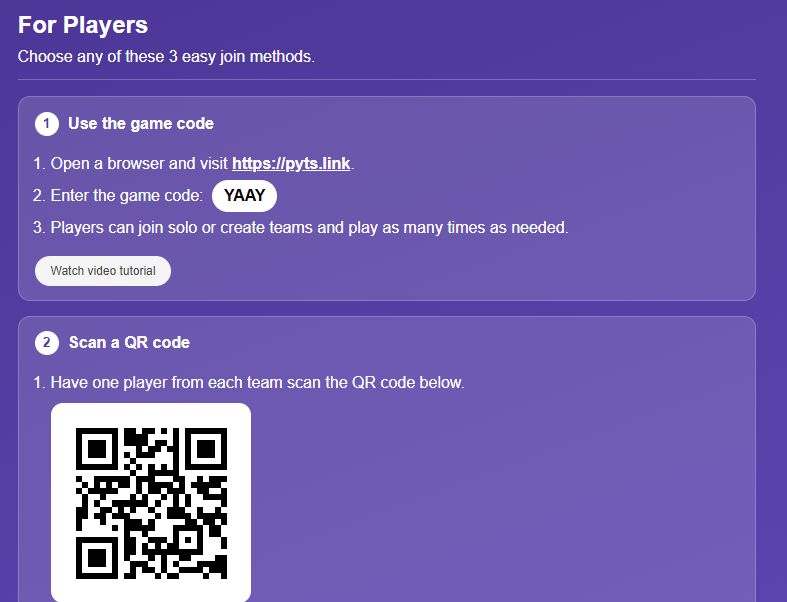
How to avoid it. Use a browser-based, no-download onboarding flow. With the PlayTours scavenger hunt app, attendees join by scanning a single QR code or tapping a link. No install, no app store, no account creation before the game starts. Keep one QR visible at registration and at every high-traffic choke point — those two placements alone typically recover most of the drop-off.
3. Overcomplicated game design
The second biggest killer is making the game itself too complicated. Many organizers add too many rules, too many task types, and too many branching conditions, assuming more features will feel more engaging. It doesn’t — it feels like work.
Attendees should understand how the game works within about ten seconds of joining. If the first screen needs explaining, you’ve already lost a big share of your audience.
How to avoid it. Structure the game as a small number of interactive checkpoints, with a simple, visible scoring mechanic:
- QR-based or GPS-based check-ins at each sponsor/booth/stage
- One short task per checkpoint — a multiple-choice, a photo, or a single-sentence free-text reply
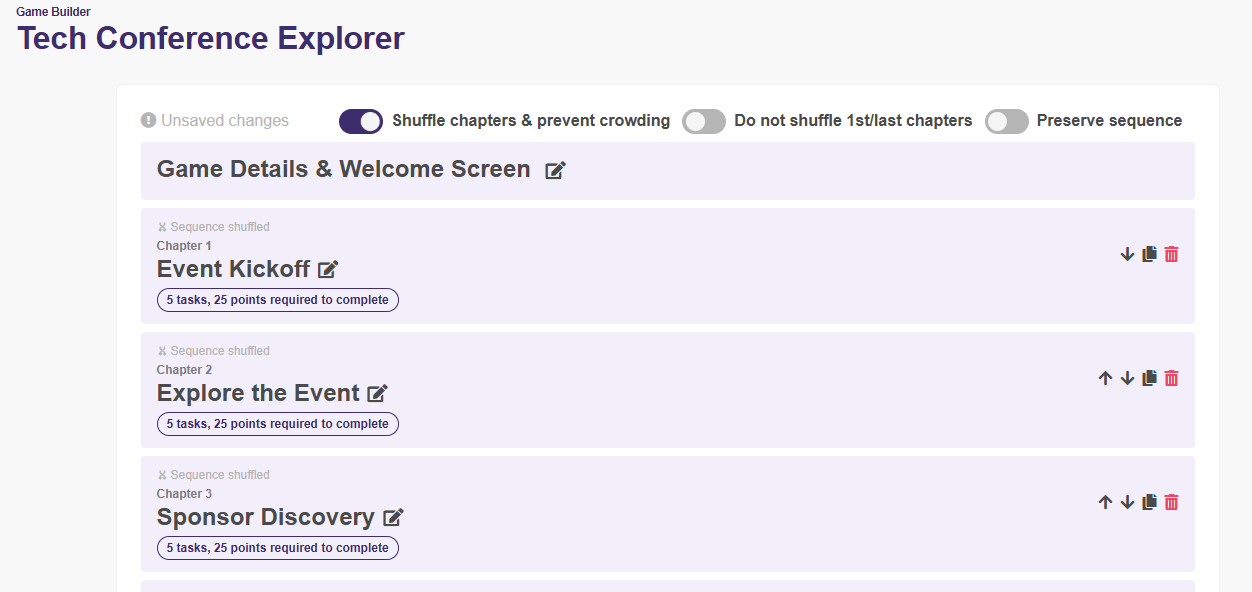
- Clear progression (chapters or rounds) so attendees know where they are in the game
Pick a scavenger hunt app with a flexible checkpoint system so you can adjust difficulty without rebuilding the game from scratch.
4. No anti-crowding design
When a game has no structural way to spread attendees out, the opposite of what you want happens: everyone rushes the same three booths near the entrance, while the rest of the floor stays dead. Sponsors on the far side of the hall get no traffic, and the attendees themselves have a worse experience because they’re stuck in queues.
This is usually not a content problem — it’s a mechanics problem. Most gamified events simply don’t have a mechanism to prevent clustering.
How to avoid it. Three specific techniques work well:
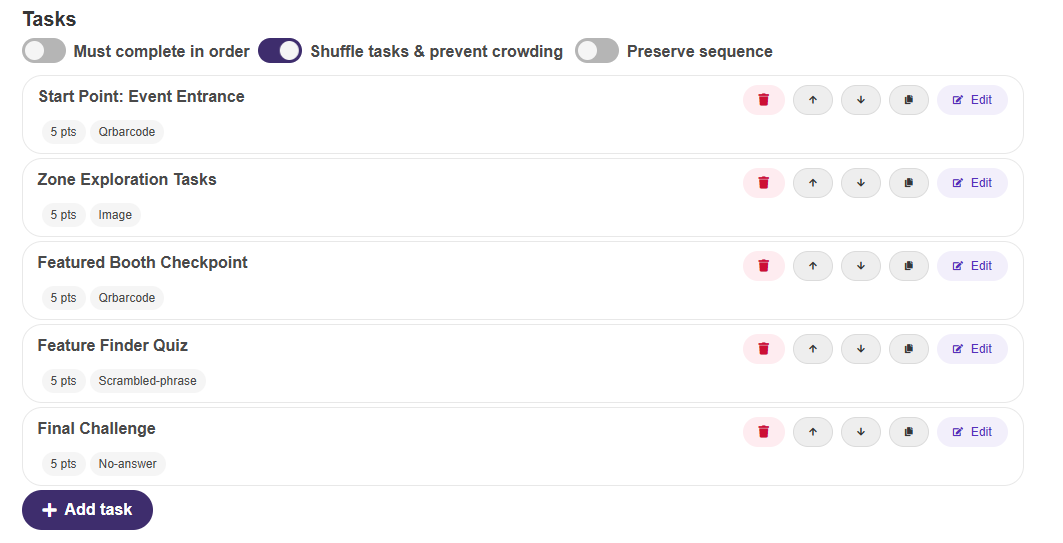
- Shuffle tasks across teams. Each team gets a different random order through the same pool of tasks, so no two teams are hunting the same booth at the same moment.
- Limit how many teams can be on a task at once. If the limit is reached, later teams are routed to the next available task. This is the single most effective anti-crowding mechanic at scale.
- Points-to-complete thresholds per chapter. Teams only need to hit a points floor, not every single task, so they can self-select across the floor.
Platforms like PlayTours have these built in. “Shuffle Tasks” and “Limit Teams in Shuffle” exist specifically for this problem — they’re the difference between a hall that hums and one that clusters at the front.
5. Treating the leaderboard as the whole product
The last mistake is the most common once you’ve avoided the first four. Teams show a leaderboard from minute one, and the game becomes pure competition. Two problems follow: (1) attendees who aren’t within reach of the top disengage early, and (2) there’s nothing to do with the event after the close beyond announcing winners.
Gamification only delivers real business value when the data and the follow-up are built into the design, not bolted on afterward.
How to avoid it. Use the leaderboard sparingly, and plan the data and follow-up flow before the event:
- Show the leaderboard at two or three specific moments (mid-game, final hour, close) rather than continuously.
- With proper consent, capture what you actually need for sponsor follow-up: booth visits, quiz correctness, lead qualifiers (role, industry, buying timeline).
- Plan the post-event send the same week you plan the game. Trade-show gamification data suggests that event-specific follow-up — referencing the game and the attendee’s own participation — can lift post-event response rates by more than 40% [1].
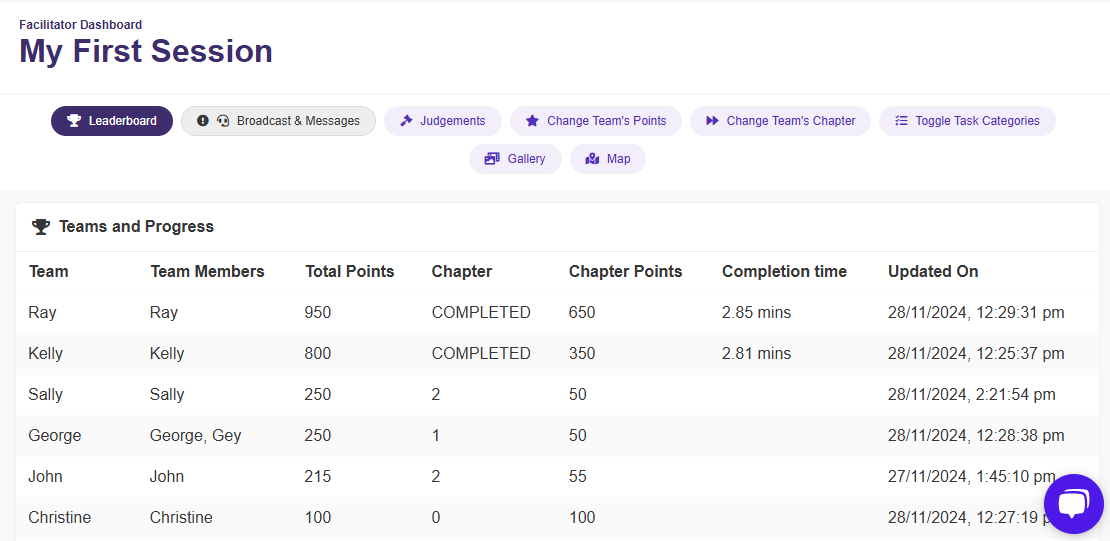
Pick a gamification platform or scavenger hunt app with built-in analytics, a real-time leaderboard you can toggle, and an exportable data layer. Platforms like PlayTours include live tracking, a built-in admin dashboard as your control centre, and analytics features that let you turn the event’s data into the next campaign instead of letting it evaporate.
Conclusion
Gamification at corporate events is a strategic tool, not a feature. Done well, it influences attendee behavior and delivers measurable outcomes: higher booth dwell time, better lead capture, and more usable event data [1][2].
The five mistakes above are what reliably break that result: no clear objective, forcing a download, over-designed rules, no anti-crowding mechanic, and treating the leaderboard as the whole product. Avoid those, and you have the foundation of a gamification strategy that’s simple, goal-driven, and designed around how your attendees actually behave.
Want to try it for free?
If you want to run a gamified event that avoids these mistakes, the right tool makes most of the difference. With PlayTours you can launch a fully interactive scavenger hunt with:
- Instant, no-download onboarding via QR or link
- QR- and GPS-based checkpoints
- Shuffle tasks and team limits for anti-crowding
- Live leaderboards and real-time tracking
- Built-in analytics and admin dashboard
You can create a free account and explore all features to see how it fits your event before committing.
Sources
- Made For Arcade, Trade Show Gamification ROI Report. madeforarcade.com
- Apex Logic, PWA vs Native Apps 2026: Benchmarks, Adoption, & Strategic Choices. apex-logic.net